# What Is The Secret Behind Lululemon's Supply Chain Mastery?

Your supply chain feels chaotic and you struggle to get the quality you want. You see brands like Lululemon dominate and wonder how they make it look so easy.
Lululemon’s mastery comes from a [hybrid supply chain](https://www.inboundlogistics.com/articles/hybrid-supply-chain/ "inboundlogistics.com")[^1]. They design their own fabrics, then outsource manufacturing to a small group of elite partners. They connect all inventory with RFID technology, creating one flexible system that gives them total control from factory to customer.
As a sourcing agent with over a decade of experience in Guangdong, I've seen firsthand what separates average supply chains from great ones. Lululemon's model is a masterclass. It’s not just one thing; it’s a combination of brand philosophy, smart manufacturing choices, deep [supplier partnerships](https://hbr.org/2004/12/building-deep-supplier-relationships "hbr.org")[^2], and a relentless focus on quality. For business owners like you, understanding their strategy is key to optimizing your own operations. Let's break down how they do it, so you can apply these lessons to your own business.
Lululemon owns and operates all of its manufacturing factories to ensure quality.False
Lululemon does not own its factories. It outsources 100% of its production to a carefully selected group of third-party manufacturers.
Lululemon's founder, Chip Wilson, was inspired to start the company after attending his first commercial yoga class.True
The official company history states that Chip Wilson founded Lululemon in 1998 in Vancouver, Canada, after being inspired by the yoga culture and the technical athletic fabrics he saw.
## How Did Lululemon's "SweatLife" Philosophy Shape Its Supply Chain?
You know your brand has a story, but it feels disconnected from your products. This gap can weaken your brand and confuse customers, making your operations feel purely transactional.
Lululemon’s "SweatLife" philosophy is the cultural engine that drives its supply chain. This philosophy demands high-performance, community-tested products. This forces their supply chain to be a strategic asset focused on innovation and quality, not just a department that cuts costs.

The "SweatLife" philosophy is more than just a marketing slogan; it's the core of the business. It dictates that every product must support an active, mindful lifestyle. This principle has a direct impact on every link in the supply chain.
### 1.1 The Birth of a Brand
It all started in 1998 in a Vancouver yoga studio. The goal wasn't just to sell clothes, but to create a community hub for people to learn and discuss the physical and mental aspects of a healthy life. This community-first approach meant the products had to be genuinely good.
### 1.2 The "SweatLife" Philosophy
This philosophy is about creating technical apparel for an active lifestyle. It created a loyal following that expects the best. This demand justifies the premium price and, more importantly, the investment in a top-tier supply chain capable of delivering on that promise.
### 1.3 The Strategic Importance of Lululemon's Supply Chain
Because the brand promise is so high, the supply chain can't be an afterthought. It must be a source of innovation and quality. I see this with my clients at REPA. When a client's brand is built on a specific promise, like "the most durable toy," we have to find suppliers who are obsessed with material science and testing. Lululemon does this on a massive scale.
Lululemon was founded in the United States.False
Lululemon was founded in Vancouver, British Columbia, and is a Canadian company.
The 'SweatLife' is a core part of Lululemon's marketing and brand identity.True
The 'SweatLife' represents the company's focus on an active, mindful lifestyle, which is central to its brand community and product development.
## Why Does Lululemon Manufacture in Countries like Vietnam and Cambodia?
Choosing where to manufacture is a huge decision filled with risk. Pick the wrong country, and you could face high costs, poor quality, shipping delays, or ethical problems.
Lululemon diversifies its manufacturing across countries like Vietnam, Cambodia, and Sri Lanka. This strategy helps them balance labor costs, access specialized technology, and use favorable trade agreements, all while reducing their dependence on any single country, including China.

I often advise my clients that putting all your eggs in one basket is a dangerous game in sourcing. Lululemon understands this well. Their global manufacturing footprint is a calculated strategy to build resilience. While China remains a key partner for innovation, they have spread their production to mitigate risks.
### 2.1 Overview of Key Manufacturing Countries
Their main production hubs are in Southeast and South Asia. Vietnam, Cambodia, and Sri Lanka are the leaders, but they also work with factories in other regions to maintain flexibility.
### 2.2 Roles and Specializations of Production Hubs
Different countries offer different strengths. For example, Vietnam has become a powerhouse for complex technical apparel, while other regions might specialize in different types of knits or wovens. This allows Lululemon to match the product with the best possible production environment.
### 2.3 Rationale for Manufacturing Locations
Lululemon's choice of location is a sophisticated balance of factors. It's a lesson for any e-commerce owner looking to build a robust sourcing plan.
| Country | Cost Factors | Technology & Skill | Trade & Risk Factors |
| :--- | :--- | :--- | :--- |
| **Vietnam** | Moderate labor costs | High skill in technical garments | Favorable trade access to some markets |
| **Cambodia** | Lower labor costs | Growing skill in simpler apparel | Duty-free access to some Western markets |
| **Sri Lanka** | Moderate labor costs | Strong reputation for ethical and high-quality manufacturing | Experienced in performance wear |
| **China** | Higher labor costs | Unmatched in speed, scale, and fabric innovation | Risk of tariffs and geopolitical tension |
Lululemon manufactures the majority of its products in North America.False
The vast majority of Lululemon's products are manufactured in Asia, with Vietnam, Cambodia, and Sri Lanka being the top three countries by volume.
Diversifying manufacturing locations helps companies reduce supply chain risks.True
Spreading production across different countries mitigates risks related to trade policy changes, political instability, natural disasters, and over-reliance on a single region's labor market.
## How Does Lululemon Build Its Exclusive Supplier Network?
Finding a good supplier is hard. Finding a great partner who innovates with you feels almost impossible. You might feel stuck with factories that just follow orders, not ones that help you grow.
Lululemon builds its network by keeping its supplier list small and focusing on long-term, strategic partnerships. They select suppliers based on innovation, quality, and social responsibility, treating them as extensions of their own team to protect their [fabric technology](https://heuritech.com/articles/fashion-fabric-innovations/ "heuritech.com")[^3] and ensure perfect consistency.

This is something I emphasize at REPA, guided by our principle of "Do what's right." A cheap supplier who cuts corners is not the right partner. A true partner invests in your success. Lululemon intentionally limits its number of factory partners to around 40. This allows them to build deep, collaborative relationships.
### 3.1 Supplier Selection Criteria
They don't just look for the lowest price. Their criteria are strict:
- **Quality:** The ability to meet extreme standards consistently.
- **Innovation:** A willingness and ability to co-develop new fabrics and technologies.
- **Social Responsibility:** Adherence to their strict code of conduct for ethical and sustainable practices.
### 3.2 Focus on China: Lululemon's Key Chinese Suppliers
Even with diversification, China is critical for its advanced capabilities. I know some of these big players from my time in Guangdong. They are not just factories; they are technology giants.
- **Eclat Textile Co., Ltd. & Shenzhou International:** These are vertically integrated titans. They do everything from developing yarn to knitting, dyeing, and sewing the final garment. This gives Lululemon incredible control and speed.
- **Pacific Textiles & Taihu Snow Silk:** These are specialists. They focus on specific areas like knit fabrics or premium natural fibers, bringing deep expertise that Lululemon leverages for specific products.
This curated ecosystem is a powerful competitive advantage.
Lululemon works with hundreds of different suppliers to keep prices low.False
Lululemon intentionally maintains a small, concentrated supplier base of around 40 key manufacturers to foster deep partnerships and protect its intellectual property.
Shenzhou International is a vertically integrated supplier for Lululemon.True
Shenzhou International Group Holdings Ltd. is one of the world's largest vertically integrated knitwear manufacturers, and a key strategic partner for brands like Lululemon, Nike, and Adidas.
## What Makes Lululemon's Quality Control So Effective?
Ensuring consistent quality from overseas factories is a constant battle. One bad batch can damage your reputation, lead to negative reviews, and cost you a fortune in returns and wasted inventory.
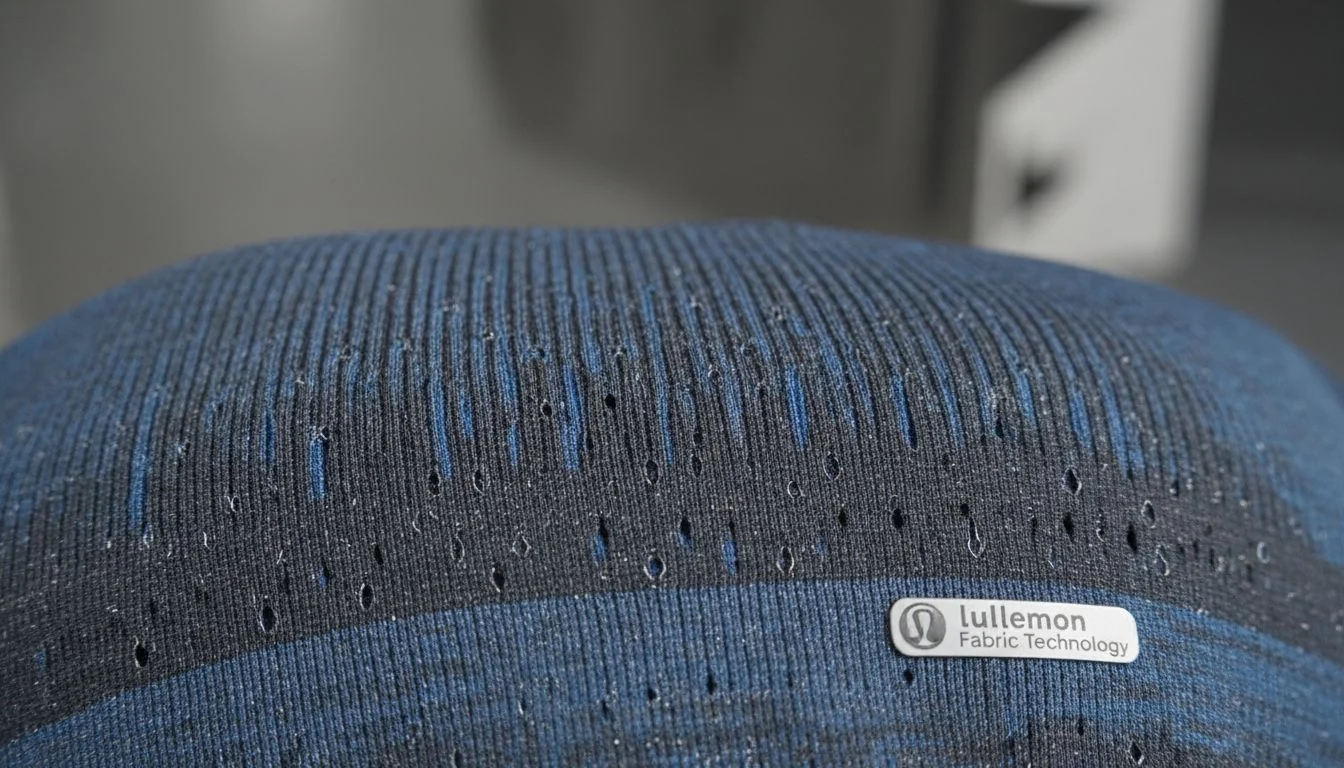
Lululemon's quality is so effective because it's built-in, not bolted-on. It starts with their patented, proprietary fabrics like Luon® and Nulu™. This is enforced through a strict, multi-stage QC process and a direct feedback loop from their community, allowing for constant product improvement.

During my years working in factories, I learned that you can't "inspect" quality into a product at the end. Quality has to be part of every step. Lululemon embodies this.
### 4.1 Patented Fabric Technologies
The quality journey begins with the materials. Fabrics like Luon®, Nulu™, and Luxtreme® are their secret sauce. They are developed in-house at their "Whitespace" R&D lab and produced only by their most trusted partners. This control over the core ingredient is the first line of defense for quality.
### 4.2 The Stringent Quality Control Process
Lululemon has teams on the ground that work with their suppliers daily. They don't just wait for a final inspection. They are involved from fabric production to cutting and sewing. This hands-on approach is rare, and it's why their fit and feel are so consistent. It's the difference between checking for mistakes and preventing them from happening.
### 4.3 The Role of Community Feedback
They use their "Sweat Collective"—a program for athletes and fitness instructors—as a real-world testing group. This feedback goes directly back to the design and production teams. This creates a powerful cycle: they innovate, the community tests, and they iterate. This makes the customer part of the [quality control process](https://www.machinemetrics.com/blog/quality-control-in-manufacturing "machinemetrics.com")[^4].
Luon® is a type of cotton used by Lululemon.False
Luon® is Lululemon's signature proprietary fabric, a blend of nylon and Lycra® spandex fibers, known for its four-way stretch and sweat-wicking properties.
Lululemon uses RFID tags on its products to manage inventory.True
Lululemon has implemented RFID (Radio-Frequency Identification) across its inventory, which allows for real-time tracking from factory to point of sale, improving accuracy and enabling omnichannel fulfillment.
## What Are the Core Pillars of Lululemon's Supply Chain Strategy?
Your supply chain feels reactive, always putting out fires. This constant chaos prevents you from scaling your business and eats away at your profits and peace of mind.
Lululemon's strategy is built on four pillars: a hybrid production model, long-term strategic partnerships, a flexible and responsive structure, and a deep commitment to sustainability. This proactive system creates a resilient and agile operation.

Looking at Lululemon's strategy, it's clear they treat their supply chain as their most important asset. It’s not a cost center; it’s a competitive weapon. As a business owner, you can adopt the same mindset. Let's look at the pillars holding it all up.
### 5.1 A Hybrid Model of Global and Localized Production
They use large-scale global partners for the bulk of their products but also have the ability to use local, faster options when needed. This balance gives them both efficiency and speed.
### 5.2 Building Long-Term, Strategic Partnerships
As we've discussed, they don't hop between suppliers. They invest in a small group of elite partners. This builds trust, protects their secret fabrics, and ensures their partners are invested in their success.
### 5.3 Cultivating a Flexible and Responsive Supply Chain
This is where their technology shines. By using RFID tags on every item, their entire inventory—in warehouses, in transit, and in every store—acts as one giant pool. This allows them to do things like ship an online order from a local store, which is faster and more efficient. They also use air freight strategically to prevent stockouts of popular items, prioritizing customer satisfaction over short-term shipping costs.
### 5.4 Deep Commitment to a Sustainable and Ethical Supply Chain
This pillar is about "doing what's right," a principle we live by at REPA. Lululemon invests heavily in raw material traceability and enforces a strict Supplier Code of Conduct. They have public goals for reducing their carbon footprint and managing waste. For modern consumers, this isn't a "nice to have"; it's a requirement.
Lululemon relies primarily on sea freight for all its shipping needs.False
While sea freight is used, Lululemon strategically uses more expensive air freight to ensure product availability and respond quickly to demand, demonstrating a focus on responsiveness over pure cost-cutting.
Lululemon has a public Supplier Code of Conduct.True
Lululemon publishes its Supplier Code of Conduct, which outlines its standards for ethical sourcing, labor rights, and environmental responsibility that all its manufacturing partners must adhere to.
## Have More Questions About Lululemon?
You've asked some great questions about Lululemon. Here are some quick, direct answers to help you understand the brand even better and see the full picture of their operations.

### 7.1 Which country does Lululemon belong to?
Lululemon is a Canadian company. It was founded in Vancouver, British Columbia, in 1998, and its headquarters are still located there.
### 7.2 What makes Lululemon so popular?
It's a combination of three things: high-quality, technical products that perform well; a powerful brand built around an aspirational "SweatLife" community; and a premium customer experience, both in-store and online.
### 7.3 Who is the current owner of Lululemon?
Lululemon is a publicly traded company, so it is owned by its shareholders. You can buy shares on the NASDAQ stock exchange under the ticker symbol LULU. Its founder, Chip Wilson, is no longer involved in day-to-day operations but remains a significant shareholder.
### 7.4 Is Lululemon produced ethically?
Lululemon has a stated commitment to ethical production. They have a Supplier Code of Conduct, conduct regular factory audits, and publish a yearly Global Impact Report detailing their progress. Like any major global brand, they face ongoing scrutiny and challenges but have invested significant resources into [ethical sourcing](https://taulia.com/resources/blog/ethical-sourcing/ "taulia.com")[^5] and transparency.
### 7.5 Where do Lululemon's raw materials originate?
Their raw materials are sourced globally from a select group of suppliers known for innovation. Many of their key synthetic fabric partners, who create the base materials for Luon® and Nulu™, are located in Taiwan and China.
### 7.6 How can a company become a supplier for Lululemon?
It is extremely difficult. Lululemon seeks long-term strategic partners, not just transactional suppliers. A potential supplier would need to demonstrate world-class innovation, massive scale, impeccable quality control, and a proven commitment to ethical and sustainable manufacturing that can pass Lululemon's stringent audits.
## Conclusion
Lululemon's success proves that a strategic, well-controlled supply chain is your most powerful asset. It's not a cost, but the engine for building a resilient and beloved brand.
---
## References
[^1]: Understanding hybrid supply chains can help businesses optimize their operations and improve efficiency.
[^2]: Learning about supplier partnerships can enhance collaboration and innovation in your own supply chain.
[^3]: Exploring fabric technology innovations can inspire product development and enhance performance.
[^4]: Exploring quality control processes can lead to improved product consistency and customer satisfaction.
[^5]: Understanding ethical sourcing practices can help businesses build trust and transparency with consumers.How to Buy from 1688 as a Foreigner Complete 2025 Guide
Unlock 1688 savings! Overcome payment, shipping, and language barriers with our 2025 guide. Start sourcing smartly today!

 English
  Русский
  العربية
  Español
  Français
  Deutsch
  Português do Brasil
  日本語
日本語